ServicesAC Installation
AC Installation in Medical Lake
We install central air conditioners sized to your home, set level on a solid pad and finished neatly inside and out. The same small crew that measures your home is the crew that installs and tests the system, so nothing gets lost between visits.
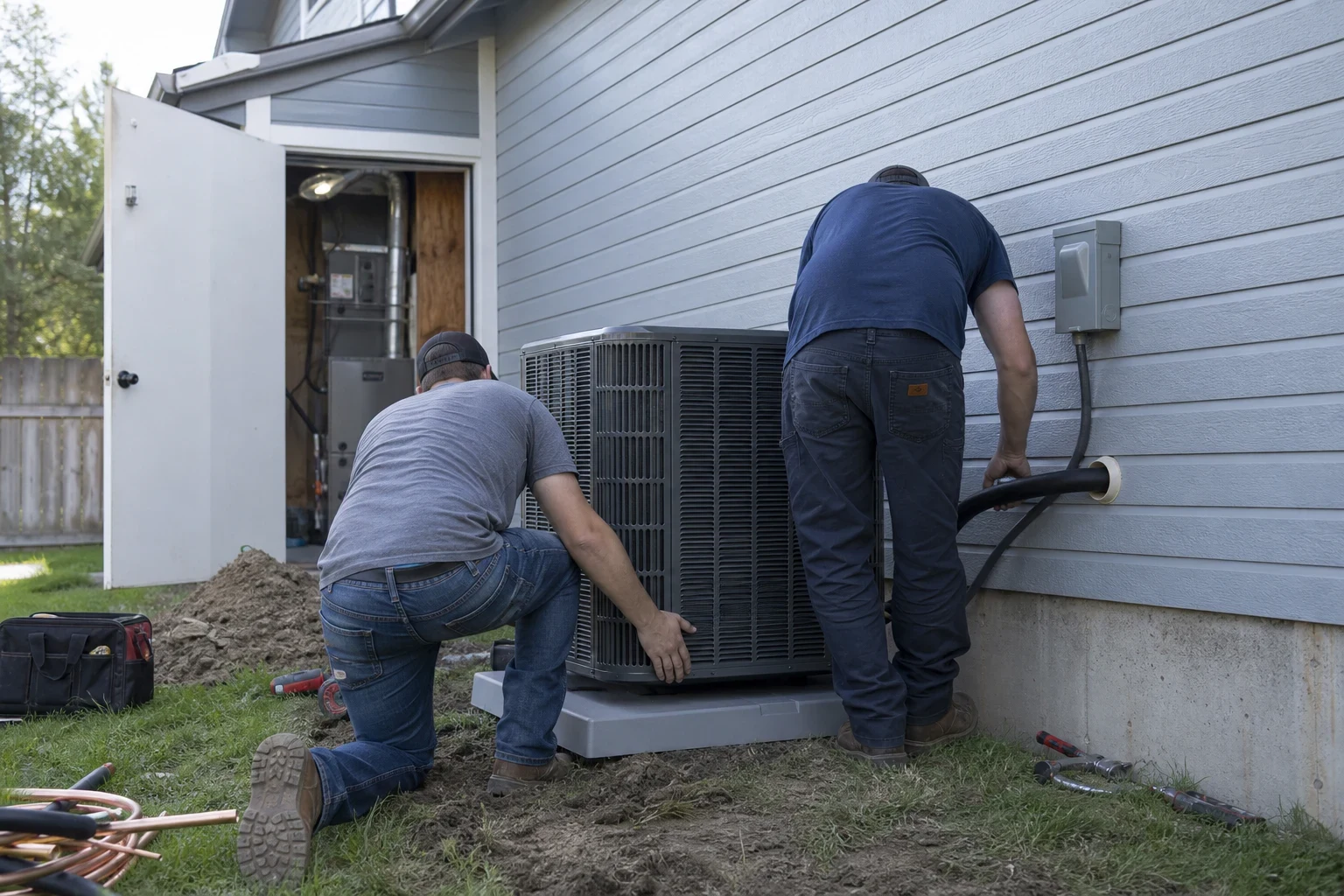
A new air conditioner, done carefully
A new AC is a long-term part of your home. How well it cools, how loud it runs and how long it lasts depend as much on the installation as on the brand. A unit that is too large cycles on and off and leaves rooms clammy. One that is too small runs all afternoon and still falls behind.
We start with a proper load calculation, not a guess based on square footage alone. We look at insulation, window area, which way the house faces and how the rooms are laid out. Then we recommend equipment that fits, explain why, and give you a written quote before any work begins.
Estimates are free on installations and replacements. If a heat pump or a ductless mini-split would serve your home better, we will tell you and show you the difference plainly.
What your installation includes
- Load calculation and sizing
- We measure your home and work out how much cooling it actually needs. That number drives the equipment choice, so you are not paying for capacity you will never use.
- Removal of the old unit
- We recover the refrigerant from your old system the right way and haul the equipment away. You are not left with a dead condenser beside the house.
- Outdoor condenser set and leveled
- The new condenser goes on a level pad with proper clearance for airflow and service access. We keep it away from dryer vents and shrubs that would choke it.
- Indoor coil and line set
- We match the indoor coil to the outdoor unit, run or reuse the refrigerant lines where they are sound, and insulate the suction line so it does not sweat. Brazed joints are pressure tested and evacuated before any refrigerant goes in.
- Electrical, drain and thermostat
- We connect a dedicated disconnect, route the condensate drain so it carries water away cleanly, and set up your thermostat. We pull the permit where your jurisdiction requires one.
- Startup and walkthrough
- We check refrigerant charge, temperature split and amperage, then show you how the system works and what to look after.
Signs it is time for a new AC
Repairs keep stacking up
If you have called for AC repair more than once in a couple of summers, the money may be better spent on a system you can rely on. We will give you an honest repair-or-replace answer.
Your system uses R-22
Older units charged with R-22 are expensive to recharge because that refrigerant is no longer produced. A leak on one of these is often the moment to replace.
Rooms that never cool
Upstairs bedrooms at 80 degrees while the hallway is cold usually point to an undersized or tired system. Proper sizing and setup can even things out.
Rising summer power bills
An aging compressor works harder for the same result. When bills climb and your habits have not changed, efficiency is slipping.
No air conditioning at all
Plenty of homes still get by on box fans. Hot, dry summers and smoky weeks with the windows shut make a properly sized central system worth a look.
What moves the price of a new air conditioner
We put a number on an installation only after we have stood in your home and looked at the equipment, the electrical panel and where the condenser will sit. That visit costs you nothing, and the written quote lists the equipment and labor line by line. Four things carry the most weight.
System size and efficiency
Larger capacity and higher SEER2 ratings cost more up front. Higher efficiency pays back faster in homes that run the AC hard through July and August.
Condition of what is already there
A sound line set and a compatible furnace or air handler can often be reused. If the indoor equipment is near the end of its life, pairing it with a furnace installation may make sense.
Electrical needs
Some homes need a new breaker, disconnect or wiring run to support the condenser. We check your panel during the estimate so this is in the quote, not a surprise.
Placement and access
A long line run, a tight side yard or an attic air handler adds labor. A straightforward swap in the same spot costs less.
How installation day runs
- 1
Home visit and quote
We measure, look at your existing equipment and electrical panel, and talk through options. You get a written quote with the equipment and work listed out.
- 2
Scheduling and prep
Once you approve, we order the equipment and set a date that suits you. We arrange any permit before we arrive.
- 3
Install with the same crew
The people you met at the estimate are the people who show up. We lay floor protection along our path, remove the old system and set the new one, usually in a single day.
- 4
Testing and cleanup
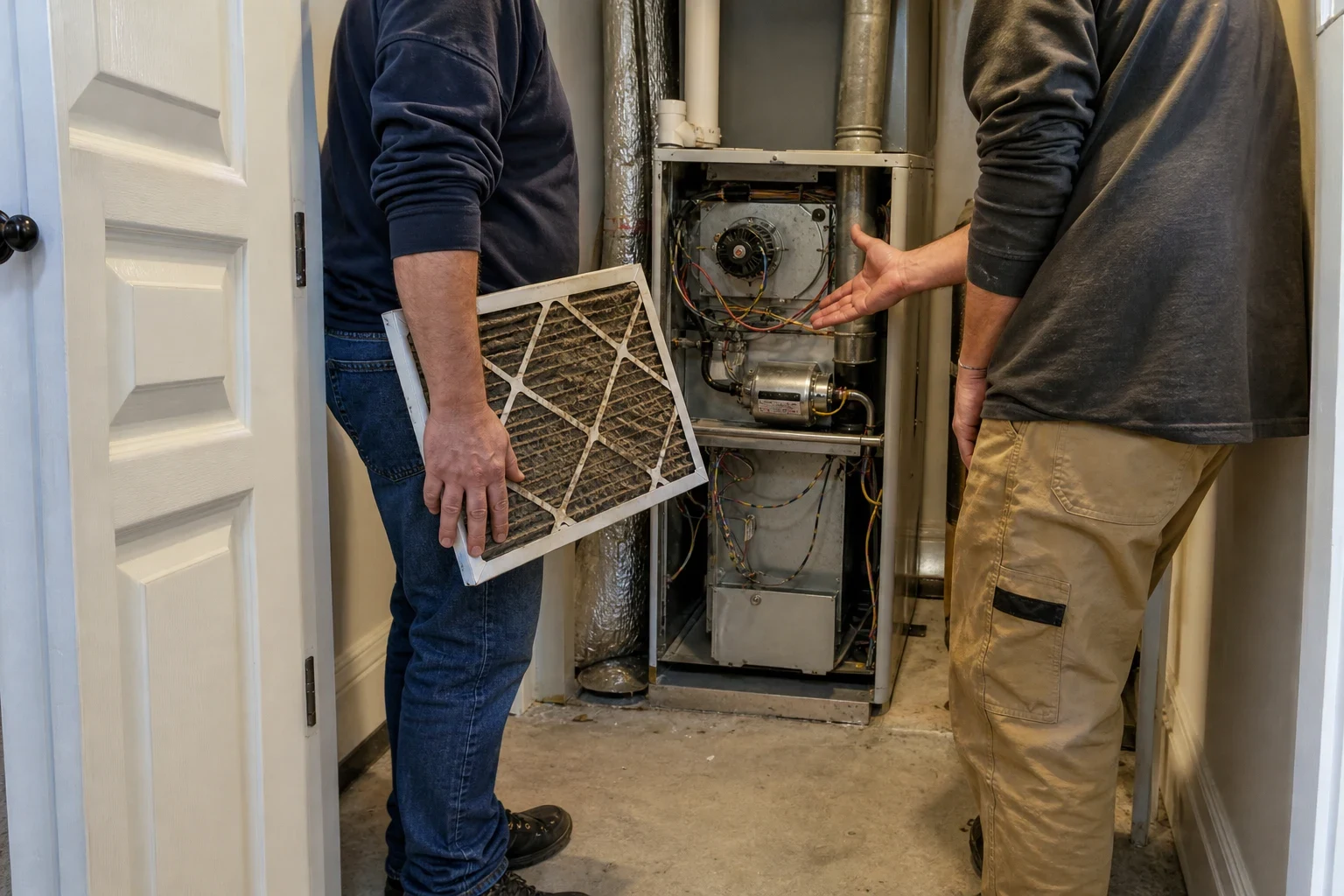
We run the system, verify charge and airflow, and clean up the work area inside and out. Before we leave, we walk you through the thermostat and filter.
AC installation questions
How long does an AC installation take?
Most replacements in an existing system take one day. A first-time install, or one that needs electrical upgrades, can run into a second day. We give you a realistic schedule with your quote.
Can I just replace the outdoor unit?
Sometimes, but usually it is not wise. The indoor coil and outdoor condenser are designed as a matched pair, and a mismatch can cut efficiency and shorten the life of the compressor. We will explain what your particular setup allows.
Should I get a heat pump instead of an AC?
It can be the better choice. A heat pump cools the same way a central AC does, then keeps heating through the mild months of spring and fall, often working alongside the furnace you already have. If you go that route, we will help you with the Avista rebate and federal tax credit paperwork. We price both options so you can compare them side by side.
Will you need to work inside my home?
Yes, at the furnace or air handler and at the thermostat. We put down floor protection, keep our work area tidy and clean up before we leave.
How do I keep a new system running well?
Change the filter on schedule and keep the outdoor unit clear of grass and debris. A yearly tune-up catches small issues early, and our maintenance plans cover that for you.
Talk through a new AC with us
We will come out, measure your home and give you a written quote with no obligation. The same small crew will see the job through to the final test.