ServicesFurnace Repair
Furnace Repair in Medical Lake
When your furnace short-cycles, blows cold or won't light, we find the actual fault, explain it in plain terms and give you a written quote before any work begins. The technician who diagnoses it is the one who fixes it and checks it afterward.
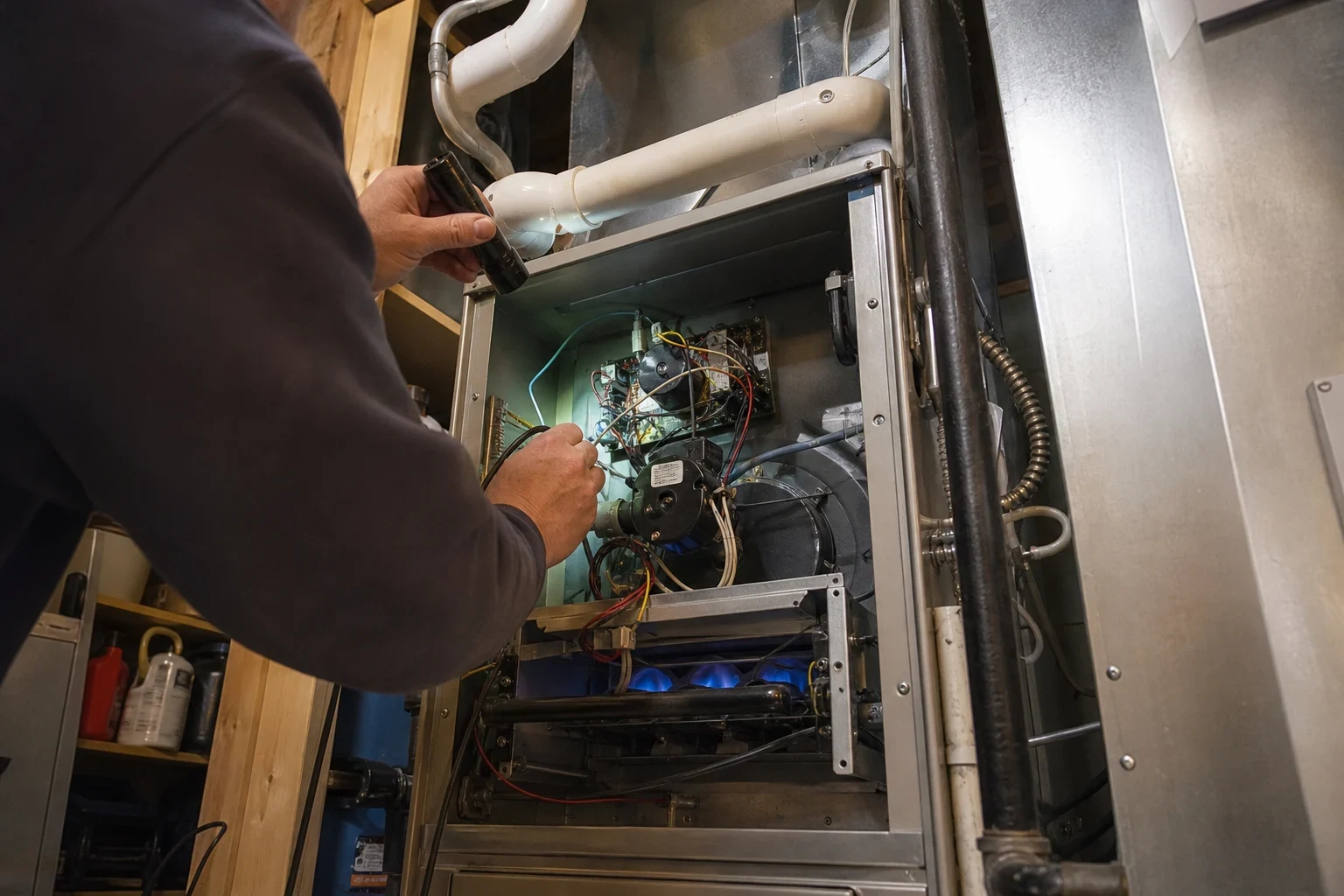
Getting a furnace back to steady, safe heat
Most furnace failures trace back to a short list of parts: a dirty flame sensor, a cracked hot surface igniter, a stuck pressure switch, a worn inducer or blower motor, or a control board with a failed relay. A careful repair starts by proving which one it is with a meter, not by swapping parts until the heat comes back.
We keep our crew small on purpose. The person who looks at your system on the first visit is the same person who returns with the part, makes the repair and runs the furnace through a full heating cycle before leaving. You never explain the problem twice, and nothing gets lost in a handoff.
Repair is usually the right call on a furnace that is mechanically sound. If the heat exchanger is cracked, or the repair approaches what the unit is worth, we will tell you plainly and walk you through furnace installation as an option, with no pressure either way.
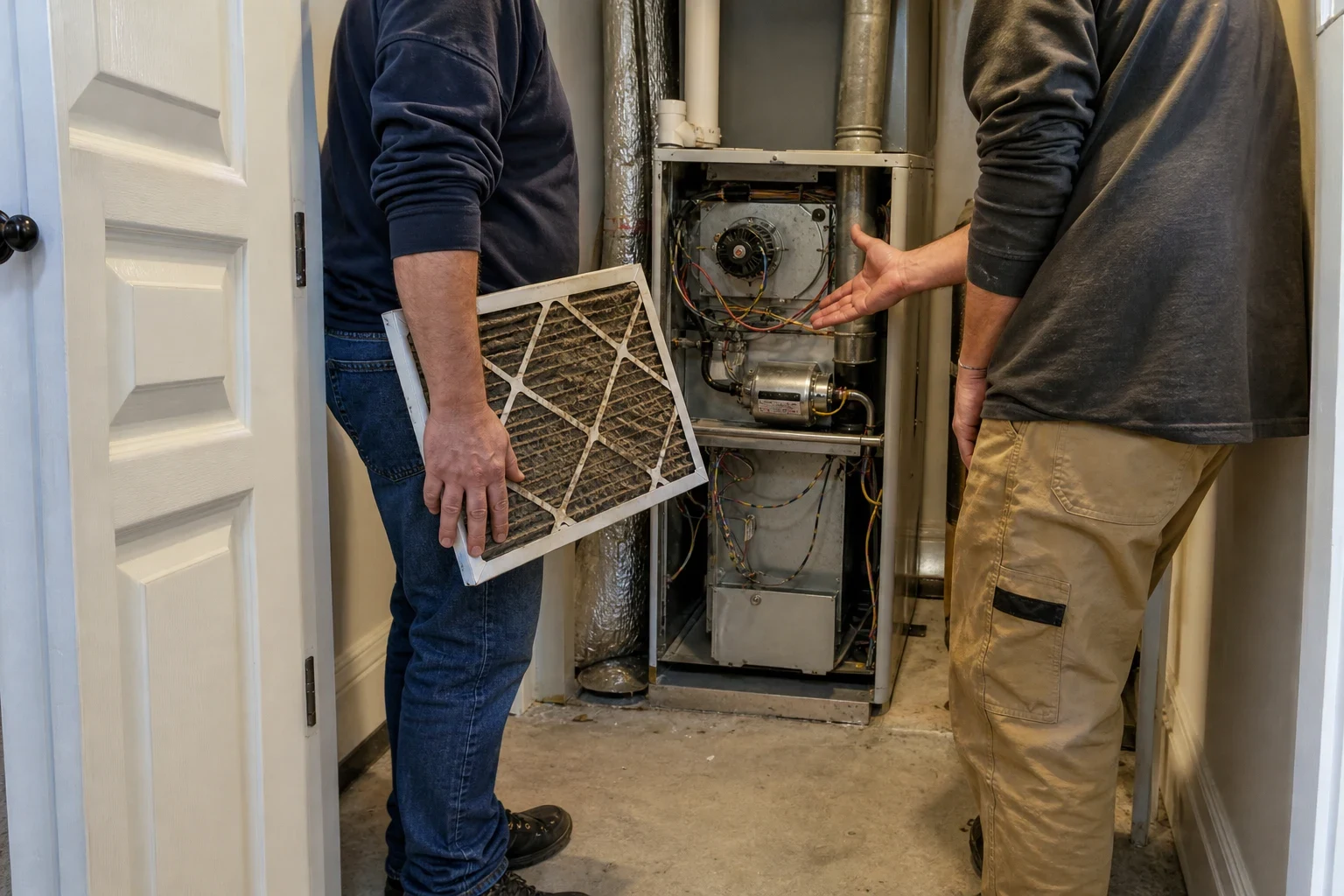
What a furnace repair visit covers
- 01
Step-by-step diagnosis
We test the ignition sequence in order: thermostat call, inducer start, pressure switch, ignition, flame proving and blower. Each reading shows exactly where the sequence breaks.
- 02
Combustion safety checks
We inspect the heat exchanger and burners, test for carbon monoxide in the flue and at the supply registers, and confirm the vent is drawing properly. A furnace that heats but doesn't vent safely isn't fixed.
- 03
Gas pressure and wiring
Gas pressure is measured against the manufacturer's specification. We also look over wiring, connections and, on high-efficiency units, the condensate drain, which is a common cause of shutdowns once temperatures drop below freezing.
- 04
A written quote first
Before any part is replaced, you get a written quote naming the part and the labor. What you paid for the diagnosis comes off the repair total once you approve the work.
- 05
A clean finish
Drop cloths go down at the furnace, cabinet panels go back on properly, and the old parts are shown to you. The area is left the way we found it.
Questions about Furnace Repair?
Call(509) 236-8362Signs your furnace needs a repair
Heat that stops too soon
You hear the burners light, then the system goes quiet again long before the thermostat is satisfied, and the pattern repeats all day. A dirty flame sensor, an overheating limit switch or a clogged filter is often the cause.
Cold air from the vents
The blower runs but the burners never light, or they light and drop out. That points to ignition, gas supply or a safety switch that keeps tripping.
New or louder noises
Squealing, grinding, a rattling cabinet or a boom at startup each point somewhere different. A boom at ignition usually means delayed ignition and should be looked at soon.
Yellow or wavering flame
A healthy burner flame is steady and blue. A lazy yellow flame suggests dirty burners or poor combustion air.
Carbon monoxide alarm
If a CO alarm sounds, get everyone outside and call the gas utility or 911 first. Then call us, and we will find the source before the furnace runs again.
How the repair goes on the day
- 1
Your call
Tell us what the furnace is doing and when it started. If you are without heat on a bitter night, we treat it as an emergency at any hour, with no emergency or after-hours fees.
- 2
On-site diagnosis
Your technician checks the filter and thermostat, then works through the ignition sequence and safety tests. You are welcome to watch and ask questions.
- 3
Written quote and your decision
We show you what failed, explain why, and hand you a written quote. Nothing is replaced until you say yes.
- 4
Repair and full-cycle test
The same technician installs the part, then runs the furnace through several complete heating cycles while watching temperature rise, flame and venting.
- 5
Walkthrough
Before leaving, we go over what was done and anything worth watching, such as an aging blower motor that may need attention next season.
What affects the cost of a furnace repair
Most repairs are priced by the part and the time it takes to reach and replace it. You see that figure in writing before we start, and the diagnostic fee counts toward it. Nights and weekends cost the same as weekdays.
- The part that failed
- A flame sensor cleaning or igniter is a small job. An inducer motor, blower motor or control board involves more material and more time.
- Age and brand of the furnace
- Common parts for current models are easy to source. Older or discontinued units may need a specific part ordered, which can add cost and a second visit.
- Access to the unit
- A furnace in an open basement is quicker to work on than one tucked into a tight closet, crawlspace or attic.
- Standard or high-efficiency
- Condensing furnaces have extra components like a secondary heat exchanger, condensate trap and PVC venting, so diagnosis and parts can run differently than on a standard unit.
Furnace repair questions
Should I repair my furnace or replace it?
If the heat exchanger is sound and the repair is a reasonable fraction of the furnace's value, repair usually makes sense. Age matters too, along with how often it has needed work lately. We give you an honest read and both numbers, then leave the choice to you.
Is it safe to keep running a furnace that's acting up?
A furnace that simply short-cycles is usually safe to run while you wait for us. If you smell gas, hear booming at startup or your CO alarm goes off, shut it down and get help right away. When in doubt, call and describe what you are seeing.
Will the same technician come back if a part has to be ordered?
Yes. Our crew is small, so the person who diagnosed your furnace is the one who returns to install the part. They already know your system and what was found.
Do you charge more for nights or weekends?
No. There are no emergency or after-hours fees, so a repair on a Sunday night is quoted the same way as one on a Tuesday morning.
What can I check before calling?
Look at the filter, confirm the thermostat is set to heat with fresh batteries, check the breaker, and make sure the switch near the furnace is on. On a high-efficiency unit, a frozen or clogged condensate line can also shut things down. If none of that helps, call us.
Can regular service prevent breakdowns?
Many failures we see start as a dirty flame sensor or neglected filter. Our maintenance plans include tune-ups, repair discounts and priority scheduling, which catch most of those issues before a cold morning does.
Get your heat back, done carefully
Tell us what your furnace is doing and we will send the technician who will see the job through. You get a written quote before any work begins, at any hour.